

L A V O C E D E L L A M E M O R I A A l l a R i c e r c a d e l l ' I d e n t i t à
Il Progetto / The Project


ROJECT CONTEXT AND BACKGROUND
The representation of "The Place of Ischia" means considering it one of the determining factors in various social sectors. Past and present, the particular and the general, politics and aesthetics, sentiment and reason converge upon it.
For us, narrating "The Place of Ischia" means, given this complexity, paying particular attention to the landscape, given the ever-increasing attention paid to the coast for many decades, with its unique resources for efficient tourism. This is why the aspect that its human-scale landscape—which seems forgotten—is unique is particularly relevant to us.
And if we want to understand this uniqueness beyond its morphological level, it helps us to reflect on the fact that in the past, writers and artists felt this great attraction and found in Ischia a place where desire finds fulfilment. For us, this also equates to a journey into the memory of its historical events.
But not only writers and artists, but also historians, geologists, archaeologists, naturalists, topographers, and photographers have described a landscape rich in character. And it is precisely the signs the landscape offers us that reveal its morphological specificities and its tormented history of continuous eruptions and magma outflows.
Rims, craters, lava ridges, flatlands, terraces, cliffs, sandy inlets, active fumaroles, and thermal waters are the tangible evidence of an orographic reality originating from volcanic genesis. In ancient times, this reality was explained by the mythological image of Typhoeus, who, punished by Jupiter, imprisoned his immense strength beneath the island of Ischia.
And finally, as the learned experts testify: Hills, valleys, promontories, heights, and coasts have formed a system of physical features through which the island's territory has always appeared as a unitary organism, a ‘Topos’. This peculiarity has made the Ischian territory a landscape, a sign of sensitive beauty and a place closely linked to the four elements: good air, abundant earth, water and fire.


TEMATICHE DEL PROGETTO
L’obiettivo del Progetto è di partire dalla valutazione che il territorio isolano è un organismo unitario, un topos. Significa che partiremo da questa affascinante unità, per andare poi dal generale nel particolare tracciando una mappa esemplare di luoghi di ‘verità di natura’ e di ‘verità urbane’- considerando la natura dell'isola come parte integrante del costruito per la sua dimensione umana – e cercando di connettere i luoghi con la dimensione della loro memoria.
Il viaggio nel particolare inizia all’ Epomeo, l’autorità morfologica – seguendo poi un percorso che ci conduce in una natura da sempre plasmata dall'uomo e in grande alternanza di paesaggi terrazzati - un tempo intensamente coltivati, con la visione di un rinascimento - e formazioni rocciose selvagge di singolare natura vulcanica. Dall’alto verso il basso fino alla costa – cioè nella direzione opposta a cui è abituata questa famosa località turistica - si svilupperà il nostro percorso, concentrandoci su Luoghi che si prestano per essere connessi alla loro memoria e che continuano a emanare la loro magia.
MEMORIA – LUOGO
"Nessuna nostalgia dell'antico, ma l'indicazione di un impegno rivolto al presente, teso al ritrovamento, o, meglio, alla invenzione di un Luogo sottratto alla omogeneizzazione e al pareggiamento di tutti i luoghi della terra cui siamo pervenuti i fasti della odierna società di massa."
Filiberto Menna
RILEVANZA DEL PROGETTO
Non è tuttavia un progetto estetico fine a sé stesso, ma finalizzato di creare con autentiche narrazioni la consapevolezza che si deve prendere a cuore questo tesoro – scritto così profondamente nella memoria - alla fine per proteggerlo. Gli esperti lo mettono ancora più energicamente, sottolineando l’urgenza e la necessità di una tutela del territorio di Ischia come freno allo sradicamento in atto.
LA DIMENSIONE DELLA MEMORIA


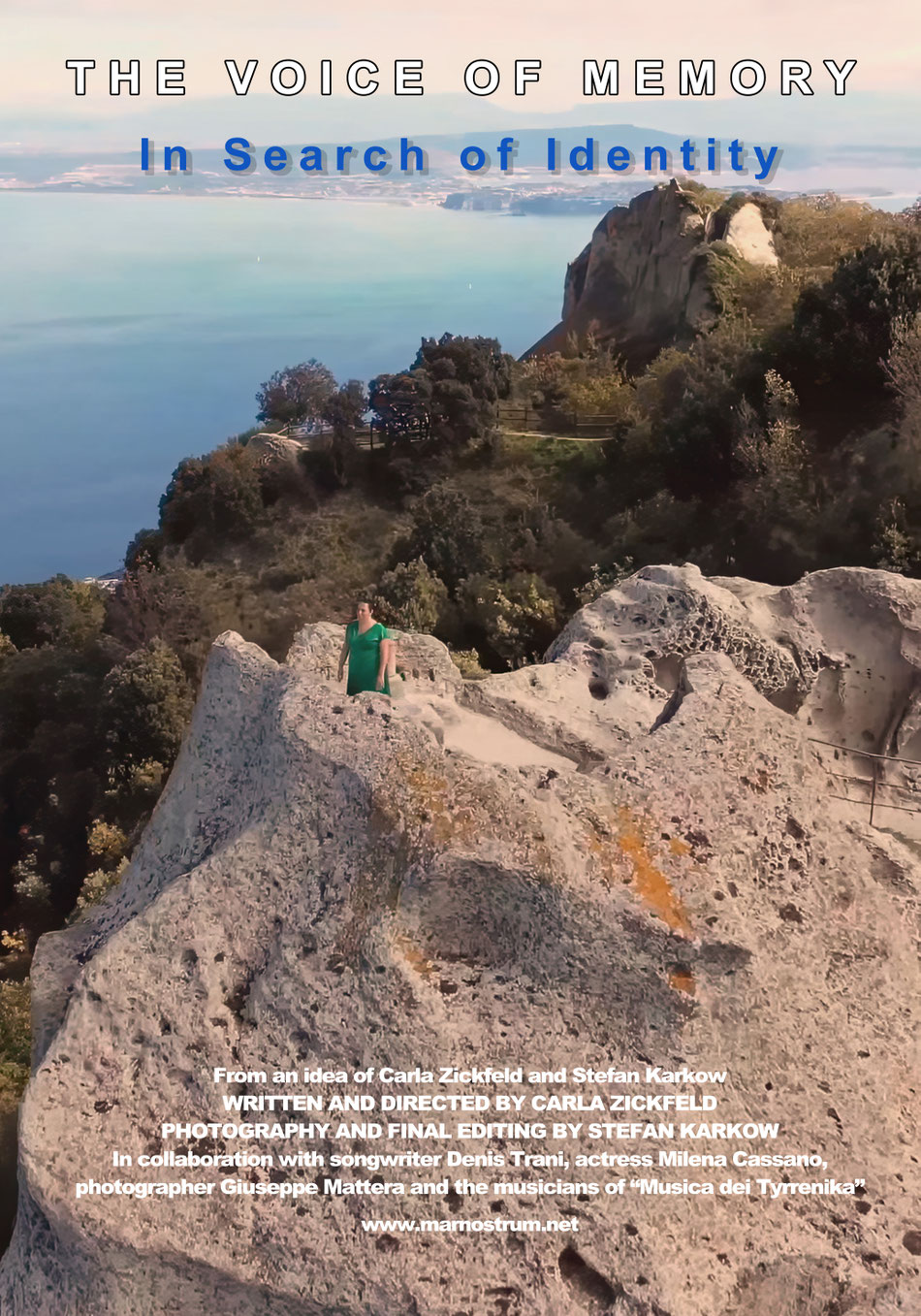
P O S T E R
Ufficial Trailer
PRIMA MONDIALE A ISCHIA
la proiezione si svolgerà il 15 luglio alle 21.30 a Villa Arbusto a Lacco Ameno.
Per sapere la data e il luogo consultate la pagina del ISCHIA GLOBAL FESTIVAL 2026 .
UFFICIAL TRAILER LA VOCE DELLA MEMORIA - Alla Ricerca dell'Identità :

Critics
The island is still far away, almost a mirage. The camera slowly approaches it, hovering over the water. In the background we hear the lyrical composition that the German poet Peter Huchel
dedicated to Ischia in 1963. “The Voice of Memory” by Carla Zickfeld (direction and story) and Stefan Karkow (photography and editing) is not a film, not a documentary, nor more simply a visual
declaration of love to a Mediterranean island. It is something more. It is a choral, sensitive, intense and poetic work of art that owes its strength to an expressive value we had almost
forgotten. Slowness, the ability to observe and listen, even when sounds may at first appear to us as simple silence. But silence it is not. It is the voice of the sea, of the wind, of the earth
and of the generations of men and women who have labored to cultivate and respect it in a relationship of mutual dependence. The film attracted me from the first sequences and remained with me
even long after its release. vision. It shows us a completely new island of Ischia, rich in history, nature, music, and professions that for centuries have eroded its identity. An identity that
today seems more akin to memory than to the reality of the present. The great merit of this film is that it does not give in to feelings, sometimes nostalgic, sometimes resigned, of the "good old
days." It is a film that delves into the depths and leaves the viewer free to discover the island from their own perspective. A film that gives free rein to the images, the sounds, the
protagonists, the sound of the wind, and the many mysteries of the springs, the volcanic rocks, the vines, and the cisterns. In other words: it is a precious film.
Walter Rauhe, Journalist and Documentary Filmmaker
Berlin Correspondent for Radio and Television of Italian-Swiss
"What beautiful and fitting words!! I absolutely agree with everything and couldn't have said it better.
Last night, R. and I watched the film and we loved it!
We especially liked the calm and profound approach you gave, both in terms of the shots and the content. We loved the opening shot of the island and the general view of the rocks, the nature, the
vineyards, the manual labor and the farmers. The interviews are also interesting and absolutely perfect, as is the choice of lyrics and music... In any case, we really enjoyed it.
It's rigorous, and the message comes across so clearly and poetically that our daughter (who watched with us) said she barely recognized Ischia and felt it was another island, and I think that
was precisely your intention!"
C.M., Ischia
"Thank you for the beautiful trailer. I'd like to propose a screening of the film in Ischia for young people and for the APCI (Ischia Cultural Park) association, of which I am vice-president. ...
Perfect, I look forward to its release! Congratulations! A truly beautiful and necessary film that questions the future of our island."
G.d.P., Ischia
Thank you for the invitation to attend the screening of the documentary yesterday in Forio. It was interesting and wonderful to revisit and reflect on the past of some of the island of Ischia. My
wife, who is very curious, would love to see it. How would that be possible? I would also suggest sending it to schools, which often address issues related to their own territories and origins.
This would encourage reflection and awareness of the island's immense richness, and could lead to plans for the use and implementation of both commercial and non-commercial, sustainable, and
other activities. Last but not least, schools undertaking European Erasmus projects could implement international projects (Comenius, Erasmus Plus, etc.) and thus disseminate the significant
characteristics and identity of our island throughout Europe.
G.I., Sant’Angelo